

Thames Perching
Ever since I first started fishing, I always had a distinct fascination for Perch. It probably had something to do with the fact that on my local River Lea, they were one of the easier species to catch on fairly crude and basic tackle! Since those early days I have regularly caught lots of perch, but the bigger specimens always seemed to elude me…………until the last year or so. I went through an incredible phase of taking friends out on my boat, fishing the River Thames in search of some of its larger residents and watching them catch incredible fish, while I continued to be on pest control, weaning all the small fish out of the swim!
One particular day I recall was at Teddington on the tidal Thames about 8 years ago. I had just got back in contact with an old school friend who I used to fish with and invited him for a day out on the boat. He didn’t have any gear anymore, so I set him up with the appropriate tackle and we headed out to a deep water mark in the weir pool that I was familiar with. We were using fairly straightforward trotted livebait rigs and I showed my friend the correct line to trot through the swim, while I set up my own gear. His float had only been in the water for 10 seconds or so and it buried in typical perch fashion. I couldn’t believe it! My eyes popped further out of my head, when after a brief tussle, a huge stripy broke surface and I slipped the net under it. It went 4lb 9oz on the scales and was the biggest perch I had set eyes on. My friend couldn’t quite appreciate the enormity of the catch and just asked me “is that a good one!” To add to the hilarity, he cast back out again and repeated the trick almost instantaneously and landed another cracking fish of 4lb 2oz! I still hadn’t set up my rod yet! Typically enough, that was all the action we had for the whole day, apart from a 12oz fish to my rod and I was starting to curse my luck! That was the last time he ever did set on my boat!
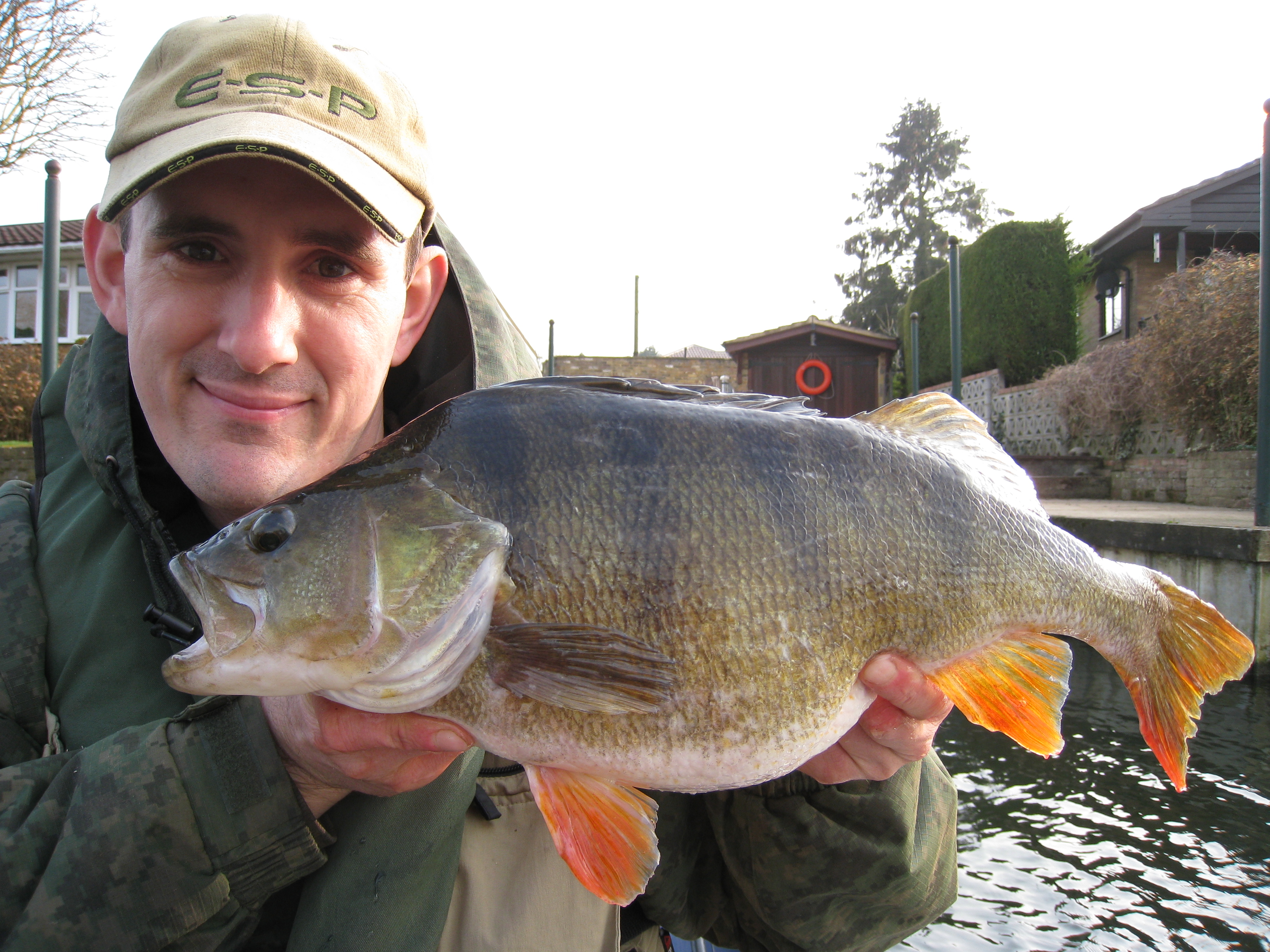
More recently however, after years of building up knowledge of Perch hideouts on the lower river, we have become more efficient at targeting the bigger residents. One of the trickier problems to over come, is catching suitable size livebaits, with my favourite species being Chublets, Roach, Gudgeon, Dace and Bleak. On some days in the depths of January, it can actually be harder to catch a 1oz Roach, than it can to catch a 4lb Perch! I have tried lure fishing and worming for them, but am 100% certain that a livebait is far more effective at tempting the better fish.
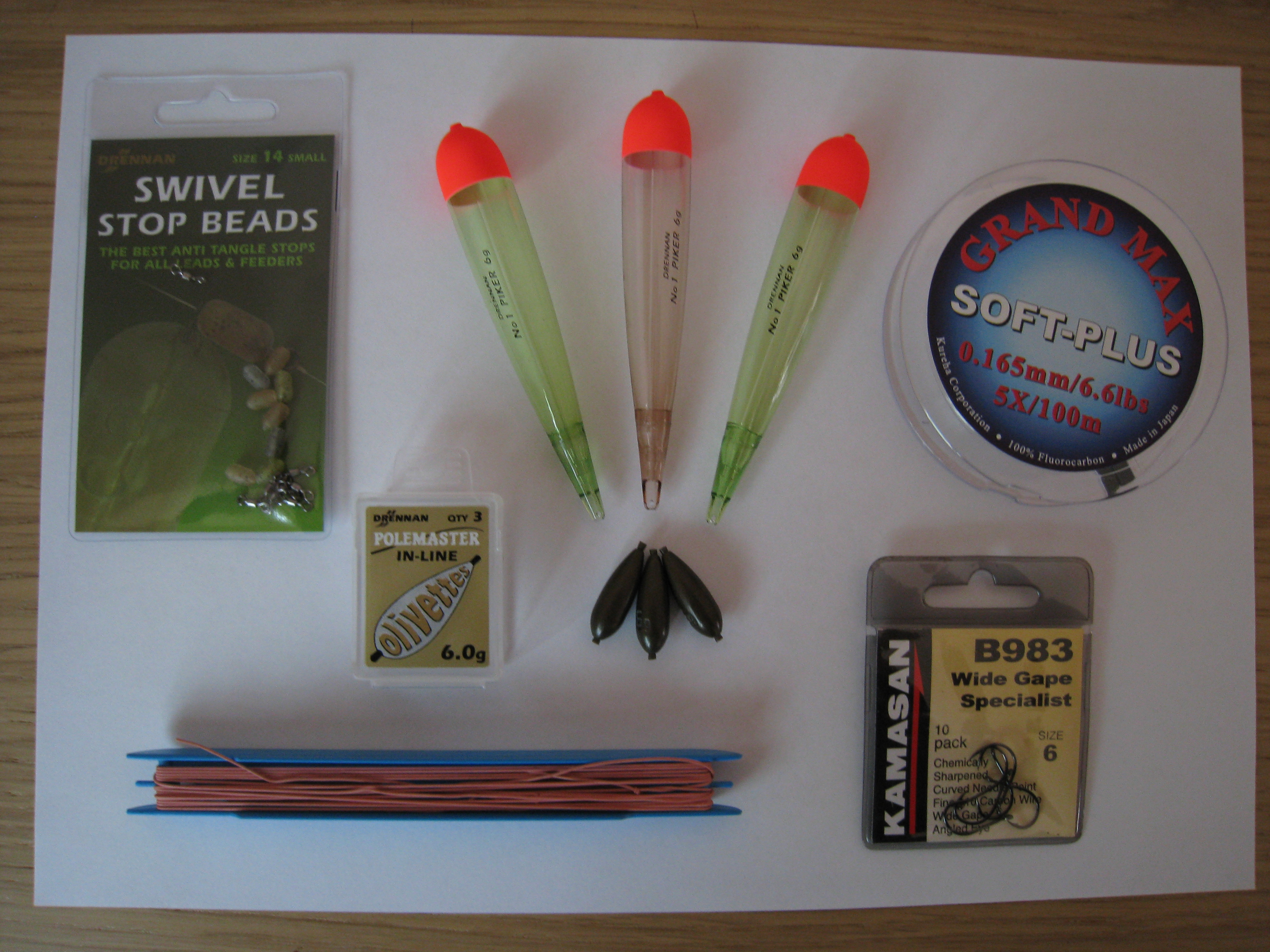
One of the lessons I have learnt from my earlier days, is to make sure everything is set up ready before getting out on the water. Also keeping gear to a minimum helps to keep it a more comfortable day. Pretty much everything I need is in a waistcoat that I wear under my lifejacket. This eliminates having extra bags clogging up the precious floor space in the boat. Virtually all my Perch fishing on the river is done by means of a trotted livebait. I find this a very exciting way of fishing and is a great way of exploring as much of the river as possible. Setup is very simple. A Drennan 6g piker float is used in conjunction with an inline 6g olivette, which sits above a swivel. Two foot of 6.6lb ‘Grand Max’ Soft Plus fluorocarbon is then tied to the other end of the swivel and is finished off with a size 6 Kamasan B983. I do prefer the fluorocarbon hooklength as I'm sure it gives me a slight edge in the usually clear waters of the Thames. It is also surprisingly robust and it is quite incredible how many pike you actually land on the stuff. The depth the float runs at is controlled by a piece of number 2 pole elastic tied on above the float with a sliding stop knot. I find this flexible material grips the line well, but also passes through the smaller eyes on an Avon rod, when fishing in deeper water. The final thing to get right with this setup is to make sure that your mainline floats as some of the takes can be quite away down the swim as you need the line to pick up quickly off the surface on a strike. This can be done by simply spraying your line with a floating spray before you commence fishing. I have experimented with braids, thinking that it would be the ideal answer, but I’m convinced it led to more hook pulls, than the slightly stretchier Drennan Supplex that I now use.
This setup can be used when bank fishing or on the boat, although the boat does give you the added advantage of not only fishing areas that no one else can get to, but also enabling you to position yourself so that a direct trot can be achieved away from the boat. This has been vital in a few swims I have fished, where the depth varies along the length of the trot. It means that as the float approaches, say a hump in the river bed or a weed clump, you can hold the float back and inch the float over the feature, without it running off course. It is also important to keep playing around with the depth the livebait is fished at. If bites are not forthcoming, keep changing the depth by an inch or two until something happens. It is amazing how a couple of inches difference can sometimes trigger a take.
The things that I have learnt over the years has led to some memorable red letter days in the last couple of winters. One session I recall, we didn’t get down to the river until lunchtime and only really had three hours fishing, by the time livebaits were caught and the boat had been setup. Conditions however were perfect, with it being milder than of late and overcast. We must have just dropped on a large shoal of very hungry fish as three hours later, I had racked up 29 Perch over 2lb 8oz , including 15 over 3lb and a best fish of 4lb 5oz. My fishing buddy had a similar tally as well, although his exact stats I can’t quite remember. This was never to be repeated again from this swim however and shows the importance of having to be mobile on an ever changing river.
