

Freshwater Informer Lure Blog #3
My first visit to Hanningfield in several years was very enlightening. I’ve fly fished the reservoir in the past for its fabled monsters but that was a different era on this trip I would be lure fishing. My boat partner for the day was Rob Orton, Rob had travelled down from Oxford to brush up his knowledge of echo sounders, my mission was to show Rob how to use his echo sounder to greater effect in his fishing system.
My friends and I have spent a lot of time, and money, perfecting our approach. Modern echo sounders incorporate ‘GPS’ which allows us to “mark” interesting features as we search the water. Once we’ve accumulated several “marked features” it’s possible to revisit these spots from time to time to see if anyone’s home? This technique has been very successful for us when targeting Zander and Perch, both species relate to structure whereas Pike and Trout are less attracted by these deep water features.
Rob and I searched the deep water in an effort to locate Perch, Hanningfield has produced Perch in the 4lb to 5lb class in recent years but last season they disappeared? We set up our first drift across a deep water gully that is also home to the aeration “bubble” line. There will be pipework on the bottom here that supply’s the oxygen, this structure will attract fish so this spot was “marked”, it will be a good feature at some time during the season.
We continued our search while casting a selection of spoons and soft plastic shads, these sinking lures allowed us to fish “slow and deep”, our drift ended at the tower on the West bank but there was no indication of fish here so we moved on to ‘Middlemead’ a large bay at the bottom of today’s South Easterly wind. Usually this bay is weedy and holds lots of Trout but my previous trips had been later in the spring when fly life is more advanced, today it’s devoid of fish. Our next “port of call” is a shallow area known as ‘Atlantis’ we set our drift across this shallow area towards the dam wall that surrounds the reservoir. The speed of our drift is slowed by using a drogue, an underwater parachute, this allows us to slow our retrieves speeds down necessary on this occasion with the water temps still only 6 degrees ‘C’. Finally we arrive at the “hot spot” ‘Inlet Bay’ where we saw bank anglers with rods bending, in fact almost all the boats in the area have anglers playing fish too, so we’re in the right place, at last.
Rob and I dropped anchor as close as we dare to the bank without encroaching on the bank angler’s water. While Rob cast a dropshot rig I was using an in-line spinner, this two pronged approach is a very effective way of finding what works quickly. I did eventually catch a Rainbow on my ‘Mepps’ but decided to moved away and focused our final drifts on a known Pike “hot spot”. We had spent an enjoyable day, our drifts had seen us visit all four corners of the reservoir in our search for Perch and Pike we did find some features that will hopefully be useful when we return.
Hanningfield’s fortunes have been turned around since the introduction of “any method” Trout fishing, it’s now one of the most popular Trout fisheries in the country. With 500 anglers visiting the fishery on it’s opening weekend Hanningfield is here to stay. I’m sure other reservoirs will be watching closely to see what happens next.
Dropshot
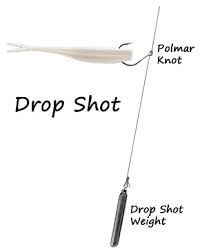
The dropshot system offers several advantages over conventional cast and retrieve methods. In essence the dropshot rig is a paternoster which presents a soft plastic lure at a constant distance off the bottom, which can be adjusted quickly using special weights, this allows you to keep your lure close to the bottom and structures while avoiding snags and weed. What is unique about this system is that it can be effectively fished against a feature without retrieving it, by holding the rod tip high like a beach caster, tension can be created between rod tip and the weight. By adjusting the level of tension in the line the lure can be made to “dance” on the spot, this really is a huge benefit when targeting fish that are not hunting but resting, the takes in this situation can be quite subtle so the most efficient rods for dropshotting have “soft” sensitive tips. As the lure is sucked in, the soft tip will draw round showing a bite, gentle movements can be imparted by tapping the rod with your index finger on the blank, experiment and find out what works on the day. As the water warms up so bites and retrieve styles can become more aggressive. The dropshot is very effective at catching Perch, Zander, Chub and many sea species while “light rock fishing” [LRF].
How to construct your dropshot rig.
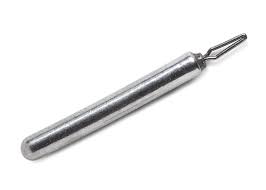
The Dropshot is best fished on a thin [0.10mm] braided non-stretch line, for sensitivity. I attach a Korda micro swivel to join the braid to the fluorocarbon trace of 0.20 about 6lb breaking strain, tie in a Decoy 123 hook about 0.5m [18”] from the swivel, tie a 1m [3’] lead link to the bottom eye of swivel then attach a pencil dropshot weight by simply jamming the line into the tapered eye.
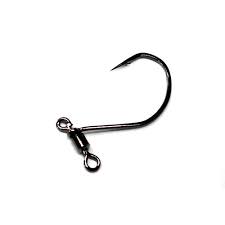
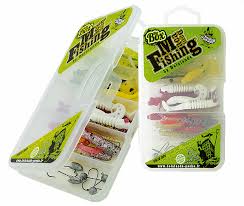
By moving the weight towards the hook or away from it it’s possible to adjust the distance your lure fishes off the bottom. Choose a selection of small soft plastic shads, worms and grubs in a variety of shapes, sizes and colours. A good starting selection is the Delalande Macadam Chest.
Tight lines.
Andy Lush

Andy owns The Friendly Fisherman in Tunbridge Wells [TN1 2PS], his shop as you would expect is full of everything a “lure angler” will need. Andy is available to offer advice on all things lure and fly fishing related.
